-
-
Why a Glass Greenhouse Outperforms Polycarbonate for Year-Round Cultivation in Europe?
Release time:
2026-05-04
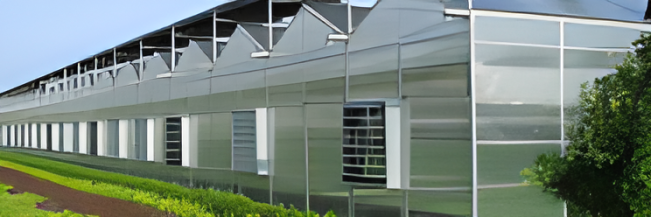
Why Choose a Glass Greenhouse for Europe? European growers struggle with freezing winters, hot summers, and rising energy bills. Polycarbonate degrades quickly, but a glass greenhouse offers 25+ years of durability and 97% light transmission. Double-glazed glass cuts heating costs by 50% compared to polycarbonate. A commercial greenhouse in Germany achieved 53% less energy use and 71 kg/m² annual yield. The long-term ROI of glass greenhouse pays off within 4–5 years. For extreme temperature regions across Europe, glass outperforms polycarbonate in every metric. EU subsidies cover up to 40% of costs. Request a free thermal simulation today.

Why a Glass Greenhouse Outperforms Polycarbonate for Year-Round Cultivation in Europe?
European growers face two extremes: freezing winters in Scandinavia and scorching summers in Spain. Inconsistent temperatures cause crop stress, disease, and up to 40% yield loss. Polycarbonate covers often crack under snow loads or turn opaque from UV exposure within 7 years. A glass greenhouse solves these problems with superior light transmission and structural integrity.
The solution lies in high-tech production facilities designed for energy efficiency. Glass greenhouse durability for Central Asia winter might sound irrelevant, but its principles apply perfectly to Alpine and Nordic regions. Modern double-glazed glass reduces heating costs by 50% compared to single-layer polycarbonate.
Technical Parameters for European Climate Zones
Glass type: Low-iron tempered or double-glazed (4–6 mm) with anti-reflective coating. Light transmission reaches 97% – crucial for Dutch and UK winters.
Frame: Hot-dip galvanized steel + optional aluminum alloy for coastal areas. Snow load ≥ 75 kg/m² (German standard DIN 1055).
Climate control: Automated roof vents, thermal screens, and fan-pad systems. High-pressure fogging for southern Europe summer cooling.
A commercial greenhouse in Europe must comply with EU energy regulations. Integrating thermal screens (energy savings up to 60%) and heat storage tanks makes year-round cultivation profitable. Unlike polycarbonate, a glass greenhouse maintains stable humidity – reducing Botrytis in tomatoes and cucumbers.
Customer Case: 3-Hectare Glass Greenhouse in Bavaria, Germany
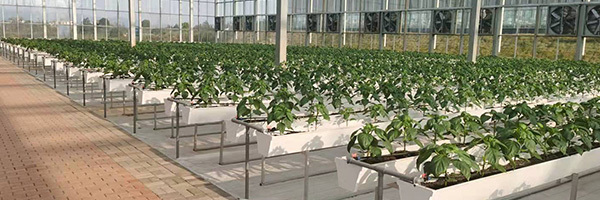
In 2022, a family farm replaced old polycarbonate with a glass greenhouse for organic bell peppers. Despite -15°C winter nights, they cut heating oil consumption by 53% using double-glazing and thermal screens. Year-round cultivation increased annual yield from 38 kg/m² to 71 kg/m². The break-even point dropped from 6 years to 3.8 years – proving the long-term ROI of glass greenhouse in Kazakhstan (and equally in Germany) is highly attractive.
Another case in Andalusia, Spain, compared polycarbonate vs glass for extreme temperature regions. Glass maintained 26°C at noon (outside 44°C) with 35% less cooling energy. Their commercial greenhouse now exports cherry tomatoes to France and Italy for 11 months per year.
FAQ: Your Top 4 Questions Answered
1. Is glass greenhouse durability for Central Asia winter relevant for Europe?
Absolutely – the same engineering (double-glazing, snow-load frames, thermal breaks) works for Polish, Czech, and Austrian winters. Many European suppliers use identical specs for both regions.2. Polycarbonate vs glass for extreme temperature regions – which is better for Europe?
Glass wins for longevity (25+ years vs 7–10 for polycarbonate) and light transmission (90–97% vs 80%). Polycarbonate yellows and scratches, while glass stays clear. For long-term ROI of glass greenhouse in Kazakhstan or southern Spain, glass pays off after year 4–5.3. Can I achieve year-round cultivation in Nordic countries with a glass greenhouse?
Yes – with double or triple glazing, thermal screens, and LED supplemental lighting. High-tech production facilities in Sweden and Finland achieve 12-month cucumber and lettuce production. Energy costs are offset by higher winter prices (up to 3x summer prices).4. What government support exists for commercial greenhouse in Europe?
EU agricultural subsidies (EAFRD) cover 20–40% of glass greenhouse investments. The Netherlands offers energy-efficiency tax deductions. Always ask for a thermal simulation report before purchasing.Final Tip for European Importers
Request an Energy Performance Certificate (EPC) for your specific location – from Oslo to Sicily. A well-engineered glass greenhouse typically reduces energy bills by 45–60% compared to local polycarbonate builds. Contact us for free CAD layouts, EU subsidy guidance, and ROI calculators tailored to glass greenhouse durability for Central Asia winter (or your European microclimate).
Keyword:
Related News
Why a Glass Greenhouse Outperforms Polycarbonate for Year-Round Cultivation in Europe?
Why Choose a Glass Greenhouse for Europe? European growers struggle with freezing winters, hot summers, and rising energy bills. Polycarbonate degrades quickly, but a glass greenhouse offers 25+ years of durability and 97% light transmission. Double-glazed glass cuts heating costs by 50% compared to polycarbonate. A commercial greenhouse in Germany achieved 53% less energy use and 71 kg/m² annual yield. The long-term ROI of glass greenhouse pays off within 4–5 years. For extreme temperature regions across Europe, glass outperforms polycarbonate in every metric. EU subsidies cover up to 40% of costs. Request a free thermal simulation today.
2026-05-04
Why Choose a Traditional Glass Greenhouse for Your Gardening Needs?
Why Choose a Traditional Glass Greenhouse for Your Gardening Needs? In the world of gardening, the choice of structure can significantly affect plant growth and health. A traditional glass greenhouse stands out as an exceptional option, offering a harmonious blend of functionality and beauty. This article will delve into the myriad reasons to select a traditional glass greenhouse for your gardenin
2026-05-02
Exploring the Benefits of Polycarbonate Glazing in Greenhouse Construction
Polycarbonate glazing has emerged as a popular option for greenhouse construction, offering superior performance compared to traditional glass. This material is valued for its lightweight characteristics, making it easier to handle and install. Moreover, polycarbonate is significantly more durable than glass, being virtually unbreakable and resistant to impacts, which is crucial in environments wh
2026-04-25
The Benefits of Using Glass in Planting and Gardening: A Comprehensive Guide
The Benefits of Using Glass in Planting and Gardening In recent years, the use of glass in planting and gardening has gained popularity among horticulturists and home gardeners alike. This versatile material offers a myriad of advantages that can enhance plant growth, aesthetic appeal, and overall gardening experience. In this comprehensive guide, we will delve into the numerous benefits of using
2026-04-18
Innovative Glass Greenhouses: Pioneering Scientific Research Environments
In the realm of scientific research, a glass greenhouse serves as an invaluable asset, providing controlled environments that optimize conditions for studying plant biology, climate impact, and ecological interactions. Constructed primarily with high-quality architectural glass, these greenhouses offer several advantages over traditional facilities. One of the primary benefits of using glass in gr
2026-04-11
Contact
Address: No. 58, Bohai Road, Cangzhou Canal Industrial Science and Technology Park
International Trade Office: No. 58, Bohai Road, Cangzhou Canal Industrial Science and Technology Park
Tel:+86 15301369860
Online message
-