-
-
Three-dimensional hydroponic culture is a kind of soilless cultivation technology
Release time:
2024-05-31
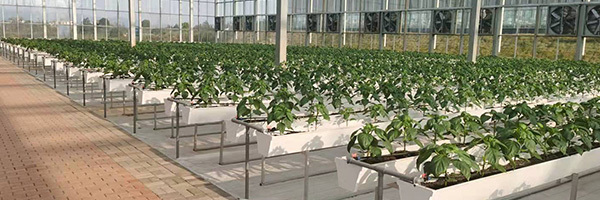
Three-dimensional hydroponics is a soilless cultivation technology, which involves the use of hydroponics in three-dimensional containers to grow plants, such as forage, grapes, etc., in order to achieve environmentally friendly agricultural production. Compared with traditional soil cultivation, three-dimensional hydroponics has the following advantages: High yield: By controlling the supply of nutrient solution, it can promote the rapid growth of plants and increase the yield. Green: It avoids soil pollution and pest problems, reduces the use of pesticides and fertilizers, and is environmentally friendly.

Three-dimensional hydroponics is a soilless cultivation technology, which involves the use of hydroponics in three-dimensional containers to grow plants, such as forage, grapes, etc., in order to achieve environmentally friendly agricultural production. Compared with traditional soil cultivation, three-dimensional hydroponics has the following advantages:
High yield: By controlling the supply of nutrient solution, it can promote the rapid growth of plants and increase the yield.
Green: It avoids soil pollution and pest problems, reduces the use of pesticides and fertilizers, and is environmentally friendly.
Environmental protection: water resources utilization efficiency is high, reducing the consumption of natural resources.
Space saving: Three-dimensional cultivation design allows more plants to be planted in a limited space.
The specific implementation forms of three-dimensional hydroponic technology include DFT hydroponic, which is especially suitable for areas that are not suitable for soil cultivation, such as plateau mountains and saline-alkali land.Keyword:
Related News
How Polycarbonate Glazing Revolutionizes Greenhouse Design
How Polycarbonate Glazing Revolutionizes Greenhouse Design Table of Contents 1. Introduction to Polycarbonate Glazing 2. Advantages of Polycarbonate Glazing in Greenhouses 3. Energy Efficiency and Thermal Regulation 4. Enhanced Light Diffusion and Plant Growth 5. Durability and Longevity of Polycarbonate Materials 6. Sustainability and Environmental Impact 7. Innovativ
2026-06-27
Optimal Glass Greenhouse Structures for Efficient Plant Cultivation
Glass greenhouses are increasingly recognized as ideal structures for plant cultivation, providing an environment that maximizes sunlight exposure while maintaining optimal temperature and humidity levels. The use of glass in greenhouse construction offers several advantages that contribute to the health and productivity of various plants. One of the primary benefits of glass greenhouses is their
2026-06-20
Integrating Technology: Smart Glass Greenhouses for Enhanced Scientific Research
Integrating Technology: Smart Glass Greenhouses for Enhanced Scientific Research Table of Contents 1. Introduction to Smart Glass Greenhouses 2. The Technology Behind Smart Glass 3. Benefits of Smart Glass in Scientific Research 4. Applications of Smart Glass Greenhouses 5. Sustainability and Efficiency of Smart Glass Greenhouses 6. Future Trends in Smart Glass Technolog
2026-06-13
High-quality single-row strawberry trough factories are upgrading production, boosting smart farming efficiency worldwide
2026-06-12
Contact
Address: No. 58, Bohai Road, Cangzhou Canal Industrial Science and Technology Park
International Trade Office: No. 58, Bohai Road, Cangzhou Canal Industrial Science and Technology Park
Tel:+86 15301369860
Online message
-